


 English
 French
 Arabic
 Spanish


Nova Scotia sits in eastern Canada. One of the Maritime Provinces, Nova Scotia is almost totally surrounded by water. A small landmass connects the peninsula with New Brunswick on the west, and the entire eastern shore faces the Atlantic Ocean. According to Nova Scotia government statistics, more than two million tourists visited the province in 2010, and other than Canadians, U.S. tourists visited the province more than any other nationality. Nova Scotia's picturesque coast and maritime history make the province a prime vacation choice for visitors from all over the world.

Halifax, the provincial capital and cultural center of Nova Scotia, also acts as its main port and welcoming center. A vibrant waterfront features restaurants with fresh fish from the Atlantic, nightclubs and museums. The Maritime Museum of the Atlantic (museum.gov.ns.ca) honors the city's maritime heritage, and the importance of the sea. Visitors see the history of boatbuilding, from early times to the present day.
So if you are travelling to Canada in 2018, make Nova Scotia one of the provinces to visit. Here are 10 fun facts about Nova Scotia.
1. What is the slogan on the automotive license plates in Nova Scotia?

Canada’s Ocean Playground. Nova Scotia is almost completely surrounded by water.
2. Universities
There are six degree granting universities in Halifax – Dalhousie University, Mount Saint Vincent University, Saint Mary’s University, Nova Scotia College of Art and Design, Nova Scotia Community College and The Atlantic School of Theology. There are 81 post secondary students per 1,000 people, three times the national average.
Want to study in Canada? Nova Scotia is the place.
3. Pubs and more pubs
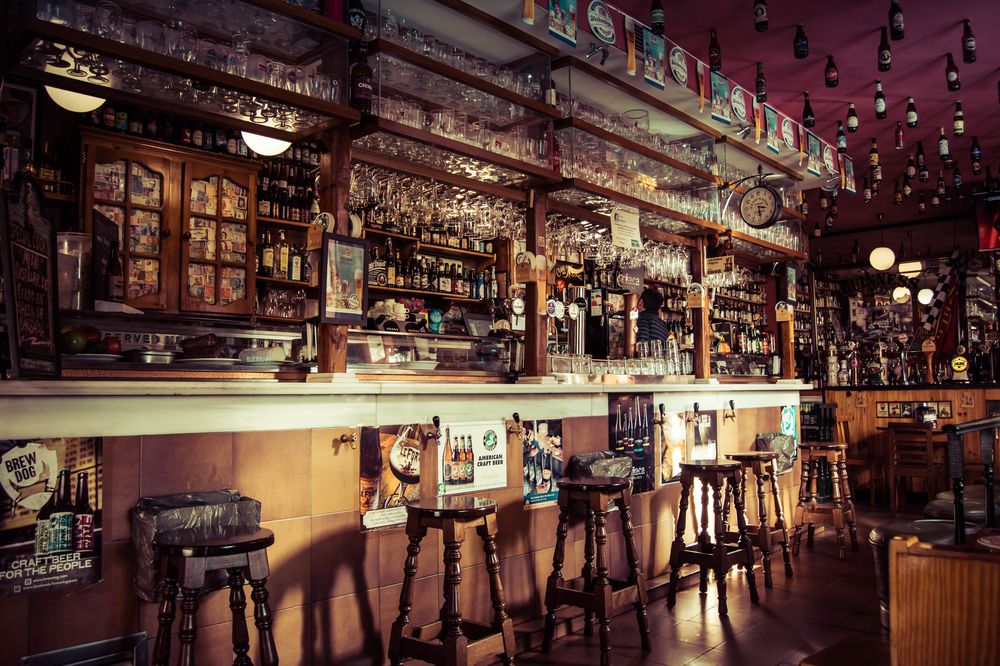
There are more pubs per capita than any other city in Canada. That might have something to do with the fact above.
4. Biggest Sporting Event

The biggest sports event is the Scotiabank Blue Nose Marathon held every May.
Over two days, participants will take part in six different events including the 5 km, 10 km, half marathon, full marathon, marathon team relay and youth run.
The event benefits charities through the Scotiabank Charity Challenge, as participants will raise money for 73 registered charities. In 2017, the fundraiser brought in more than $597,000 for local charities.
5. National Parks

How many National Parks does Nova Scotia have?
Two. Cape Breton Highlands and Kejimkujik are the two national Parks in Nova Scotia. They situated at either end of NS and both offer amazing scenery, wildlife viewing, hiking, and camping areas.
6. Nova Scotia is approximately halfway between the equator and the North Pole?
True. Parts of Nova Scotia are right on the 45 degree N line of latitude, which is officially halfway between the equator (0 deg. N) and the North Pole (90 deg. N).
7. Largest fortress in Halifax

For all history buffs. The Citadel is the highest part of downtown Halifax, it is a fortified location that looks out over the harbour. It was built by the English in the 1700s and has been remodelled a few times. It is a historic site now, and hosts many concerts and events on the hills around it. They still fire the noon hour cannon from the Citadel everyday.
8. “Bluenosers”
Nova Scotians have been proudly referred to as “Bluenosers” since the 1700s. Why were they called this?
Because of dye on their noses. Many Nova Scotians planted and exported Irish Bluenose Potatoes. Blue marks on the noses of fisherman, left by their blue mitts, gave them the nickname “Bluenosers”.
9. Land of Many Lakes

Nova Scotia has an array of lakes throughout the province. 5400 to be precise. Bras d’Or Lake is the largest lake and is located on Cape Breton Island. This large lake is a nesting site of the endangered bald eagle!
10. A shared history with the Titanic
When the Titanic stuck at iceberg on April 14th, 1912, she was 700 nautical miles east of Halifax. While the Cunard liner Carpathia took survivors to New York, the dead were brought to Halifax. There is a permanent Titanic Museum at the Maritime Museum of the Atlantic, and a hundred and fifty Titanic victims were buried in three Halifax cemeteries.

